Robin Lewis and his wife Jolandie embark on a 10-year inter-continental journey to raise awareness on the importance of stem cell donation.Could you imagine travelling through 64 countries over a decade? It’s certainly not an easy undertaking, but Robin and Jolandie are motivated by the successful stem cell transplant that Robin had after he was diagnosed with Fanconi Anemia – a genetic disorder that can lead to bone marrow failure, leukemia and solid cancerous tumours.
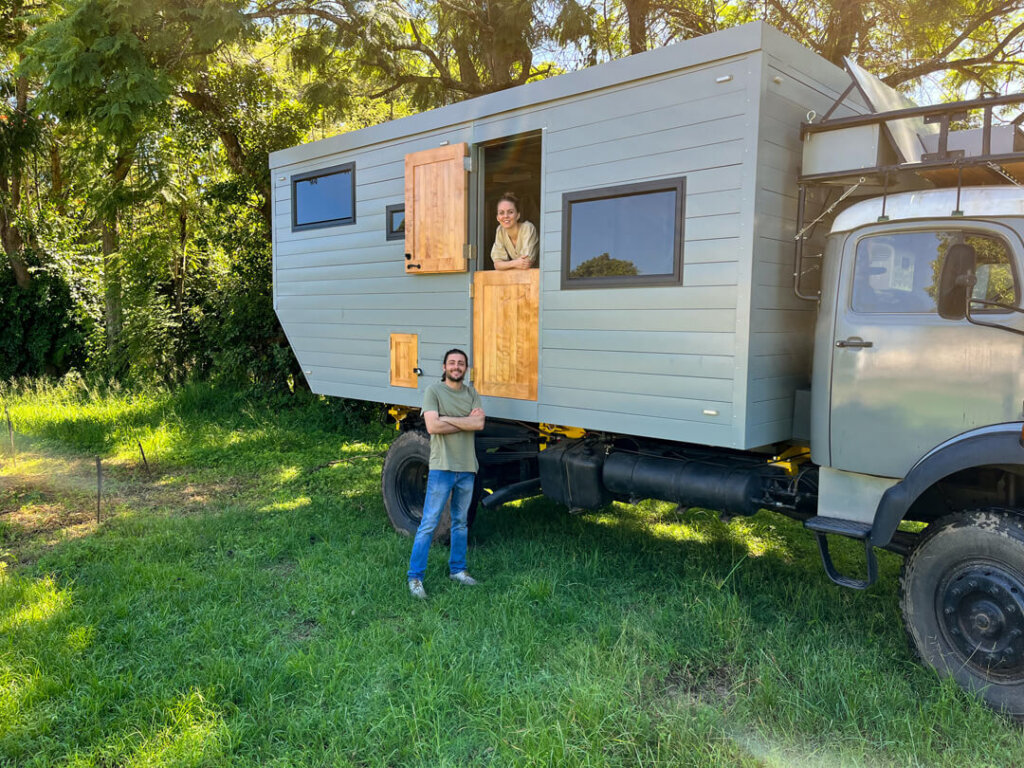
The two start their journey – dubbed Matches on the Map – this month, and will be travelling 11 000 kilometres through Africa, Europe and Asia in their custom-built motor home. Known as Betsy, the vehicle is an old fire truck that runs on used cooking oil to be more cost-effective and sustainable.
The journey’s objective is to sign up thousands of donors in partnership with the South African Bone Marrow Registry along the way – because, as Robin knows, the chance of finding a matching donor is like finding a needle in a haystack. “If it wasn’t for the stem cell transplant, I would not be here today. Since then, we’ve been plotting ideas of how to raise greater public awareness around stem cell donation, and that’s how ‘Matches on the Map’ was born,” says Robin.


And it’s not only the numbers of stem cell donors that Matches on the Map will increase, but also the diversity. “Ethnicity plays a huge role in finding donor matches, especially for patients of colour,” says Nadia Chalkley, Head of Donor Recruitment for the SABMR says Matches on the Map will allow access to a broad and much more diverse spectrum of donors. “Currently, only 35% of our donor base is of colour, which is not reflective of the demographic make-up of South Africa. This limits our ability to find matches for patients who are of African or Indian descent.”
“This project will bring us closer to making our donor database more diverse. The more donors we have from various ethnic backgrounds, the greater the chances of a match,” she says.
Much has gone into the planning of this journey – hundreds of hours of research, and building Betsy has taken almost four years. “After my transplant five years ago, my wife and I started planning the trip with the hope of changing the world,” says Robin. “Our plan was very ambitious, and we soon realised that we couldn’t do it alone. As Fanconi Anemia nearly claimed my life, we decided that we would also focus on establishing support groups for patients with this disease as we make our way through various countries, meeting up with families that are affected, and sharing their stories.


“We want to appeal to corporates and the public to come on board and help us fulfil this dream of making a meaningful change in the lives of patients who require a stem cell transplant. The likelihood of people from certain ethnic backgrounds finding a successful match is a mere 37% compared to patients from European descent whose chances are 72%. As a survivor myself, I know what a harrowing experience it is to have to wait for a donor match when you’re running out of time.”
Get Connected
numinousexpeditions.co.za
@numinous_expeditions
@numinousE
If you would like to become a donor, contact the SABMR on 021 447 8638 or email .
To donate to Robin and Jolandie’s journey, scan the QR code to visit their Backabuddy page.