The cost of getting someone to London or Nairobi is significantly higher than it was six months ago, and travel managers are being asked to tighten their purse strings. With rising oil prices, fuel surcharges and capacity constraints affecting airfares, the next logical place to look for savings is accommodation.
Enter the buddy system. Why do companies still use it?
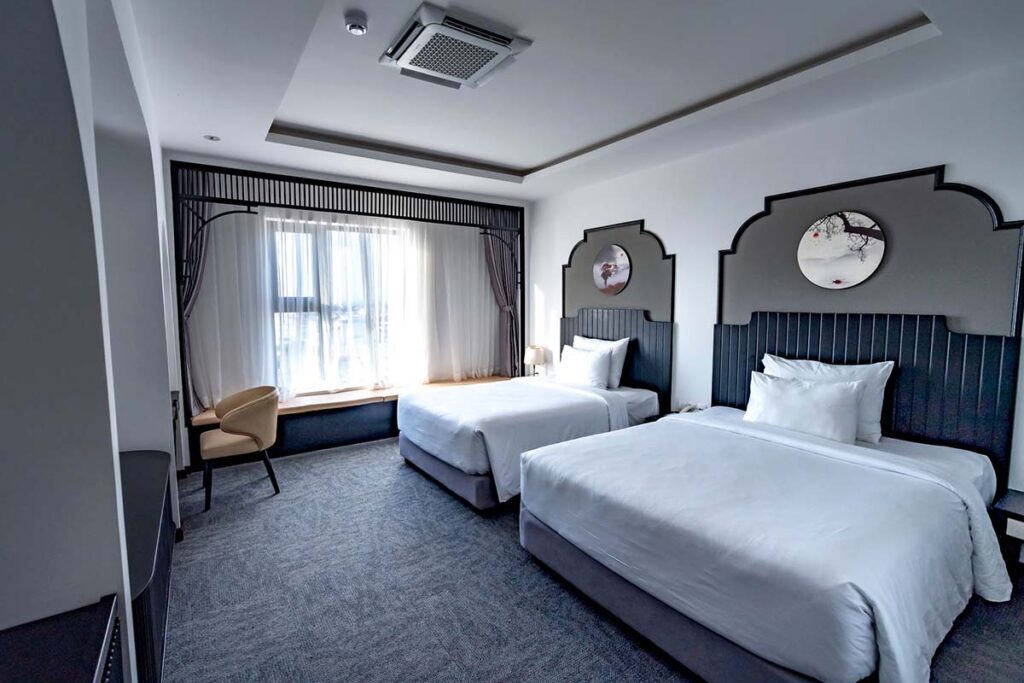
To be fair, room-sharing isn’t always a crude cost-cut. Sometimes the logic is entirely practical. A large group travelling together for a team build or MICE event may face genuinely limited accommodation options, particularly in smaller cities or in peak periods. Especially if you want to keep everyone together. Last-minute travel, a block booking that falls through, a conference hotel that’s at capacity: these are real scenarios where sharing a room is the most workable solution rather than a policy choice.
For junior-level staff, it can also carry a certain social logic – a sense of shared experience that fits the moment. And for short overnight trips where the room is little more than a place to sleep, some travellers genuinely don’t mind.
“There are situations where it makes practical sense and everyone’s comfortable with the arrangement,” says Herman Heunes, GM of Corporate Traveller South Africa. “The problem is when it becomes the default response to a budget squeeze rather than a considered decision. That’s when it starts to cost more than it saves.”
What it actually costs

The saving from sharing a room is real but against the full cost of a business trip that now includes inflated airfares, it’s a modest return.
The hidden costs (think snoring, scrolling until midnight, room temperature, bathroom schedules and someone else’s 5am alarm), meanwhile, don’t appear on any expense report. Research shows that sleep-deprived workers are up to 50% less productive than well-rested colleagues, and significantly more likely to experience burnout, emotional dysregulation and higher absenteeism. Shared rooms mean different sleep schedules, different routines and perhaps most importantly, no space to decompress or prepare.
“For a company that has spent a fortune getting someone to their destination, a compromised night’s sleep when they get there is a poor return on that investment,” says Heunes.
And as he explains, there’s also the question of duty of care.
Under ISO 31030, the international standard for travel risk management, companies carry legal and moral responsibility for employees during work travel. A shared room creates an environment that is genuinely difficult to govern – medical privacy, religious observance, potential for harassment complaints. These considerations don’t make room-sharing impossible, but they do mean it warrants more careful thought than it typically receives.
What does your travel policy actually say?
Here’s a question most travel policies don’t answer: what happens when someone says no? Or agrees in principle, then asks to pay the difference for a single room? Without a clear framework, these conversations land awkwardly – usually on a line manager who’d rather not be having them.
The companies handling this best have a few things in common: room-sharing is an opt-in arrangement, never a default; there’s a documented process for opting out without needing to justify a medical condition or personal circumstance; and where a traveller chooses to upgrade at their own cost, the policy says so explicitly rather than leaving it to negotiation. It sounds administrative, but getting this right protects the company as much as the traveller.
The generational picture
It’s tempting to assume that younger employees are more relaxed about room-sharing –that the generation comfortable with co-living and flat shares won’t mind bunking with a colleague. The reality is more nuanced. SilverDoor’s research on Gen Z business travel finds that younger travellers want spacious co-living environments and the freedom to build a personalised routine on the road, but that appetite is for shared amenities, not shared bedrooms. They want community on their own terms: a shared kitchen, a gym, a rooftop bar, an optional dinner with colleagues. And a door they can close when they need to.
Older road warriors have their own reasons for valuing privacy: confidential calls, client preparation, insomnia, the hard-won ability to decompress after a long flight. For senior employees handling sensitive commercial information, a shared room is also a professional risk. Across all generations, given the choice, most people would prefer a room to themselves. The difference is just how loudly they’ll say so.
Where the smarter saving lives
Heunes suggests looking at the aparthotel model where possible. It delivers private bedrooms and bathrooms alongside shared kitchens, living spaces and co-working areas. Teams travelling together can book adjacent units or multi-bedroom configurations, getting the proximity and informal connection of shared travel without the privacy trade-off. Hilton research found that 81% of extended-stay guests cooked in their accommodation during their last stay – a direct reduction in meal expenses that contributes to the overall saving. On stays of three or more nights, aparthotels typically run 20–30% below comparable hotel rates, with self-catering reducing the meals budget further still.
In South Africa, The Capital is a good example. Globally, hospitality groups like Frasers Hospitality, Quest, Marriott International, Hilton and Minor have all developed their aparthotel offering through different brands. It’s the best of both worlds: hotel amenities, co-working spaces, shared apartments – complete with kitchens, lounges and private bedrooms.
For Heunes, beyond accommodation type, the other levers – consolidated hotel programmes, negotiated corporate rates, right-sizing to trip length, travelling out of peak times – consistently deliver savings without asking anything of the traveller.
“The smarter conversation isn’t about who shares a room,” says Heunes. “It’s about building an accommodation strategy that absorbs the pressure from rising airfares without putting it onto the people travelling. Aparthotels, negotiated rates, the right product for the right trip length, that’s where the true savings live, and something you can sustain.”
The Middle East crisis has forced South African travel buyers to get creative about routes and carriers in ways nobody anticipated at the start of 2026. That same creative energy, applied to accommodation strategy, is where the more sustainable answer lies. The buddy system finds money once. A better policy finds it on every trip.
In a nutshell
The buddy system when travelling
Insight from Corporate Traveller, a division of the Flight Centre Travel Group