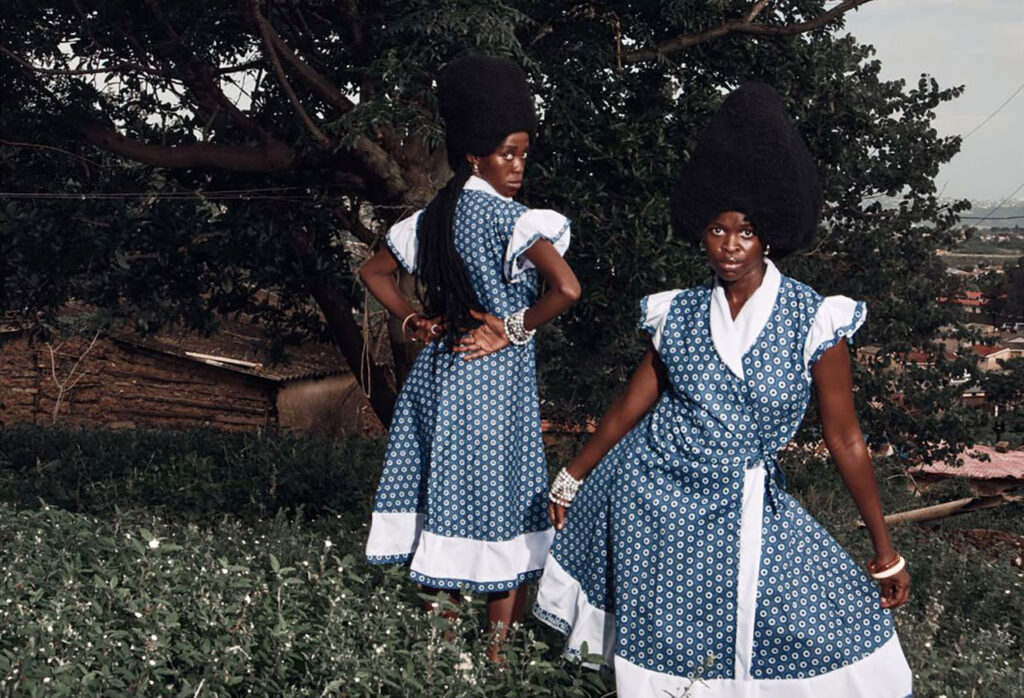
The second Cape Town Photography Festival, taking place from 2 to 26 September, explores the multifaceted theme of TRUTH through photography, bringing together local, national, and international visual narratives.
Now twice the size of its inaugural edition, the festival will feature 40 exhibitions and more than 160 photographers across Cape Town, with new venues including the Castle of Good Hope and Company’s Garden.
Festival Director Heidi Erdmann says the theme reflects a moment in which both photography and truth are increasingly contested. “Photography has traditionally carried a certain authority as a record of what was in front of the camera, but today images can be easily manipulated, re-contextualised and weaponised. We live in a time when facts can be contested, narratives manipulated, and images created, altered, and circulated at extraordinary speed.
“I chose TRUTH because both truth and photography feel under pressure. The festival is not a search for certainty, but an exploration of how truths are produced, challenged, and resisted, and the role photography plays in that process.”
For Erdmann, however, TRUTH is about much more than whether a photograph is true or false. Who decides what is true? Whose truth is recorded, whose is overlooked, and how do memory, experience, place, and perspective shape what we understand as truth?
“I was initially concerned that the theme might be interpreted too narrowly. In fact, the opposite happened. The response from photographers has been remarkably diverse, and the programme demonstrates just how many ways there are of engaging with the idea of TRUTH. For me, that has been one of the most rewarding aspects of this edition.”
The festival itself has grown significantly since its inaugural edition, doubling in size to feature ti0 exhibitions and more than 160 photographers across Cape Town. Its expanding footprint also brings photography into new spaces this year, including the Castle of Good Hope and Company’s Garden.
The International Student Photography Exhibition, is now four times larger than last year and showcasing the next generation of photographic voices across three venues. “It’s one of our flagship projects because, if the festival is to have a future, we need to invest in those who will shape it.”
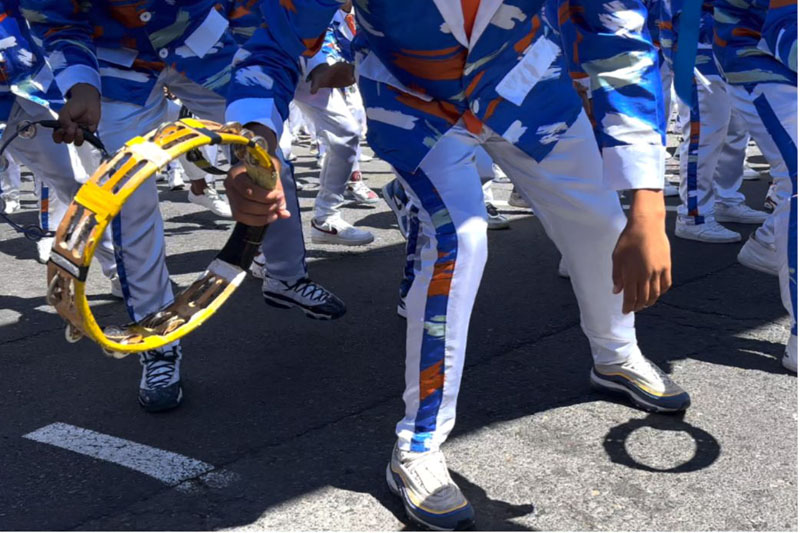
Programme highlights include:
- Cape Rhythm: Goema, Klopse & Memory in the Company’s Garden – an outdoor exhibition bringing photography into a historic public space while exploring the relationship between photographs, the city, and its history.
- Two exhibitions from Réunion Island, strengthening the festival’s connections across the Indian Ocean and introducing Cape Town audiences to perspectives they may not often encounter.
- PICHA Stock workshops from Nairobi, Kenya, offering practical engagement while introducing audiences to an important African platform for photography and visual storytelling.
- Exhibitions at the Central Library, bringing local and international photography into an accessible public institution and taking photography beyond traditional gallery spaces.
Erdmann believes photography’s traditional role as evidence has fundamentally changed. “We can no longer automatically assume that because something is photographic, it is necessarily evidence of something that happened in front of a camera.”
AI, deepfakes and increasingly sophisticated image manipulation have made audiences more conscious of the constructed nature of photographs. At the same time, Erdmann has noticed a strong return to analogue photography and traditional image-making among festival submissions. “Film doesn’t make an image inherently truthful, but its physicality – the negative, contact with the material and trace of light – offers a different relationship to image-making.”
Rather than simply asking whether photographs can still be trusted, she believes audiences need to become more aaentive viewers: questioning who made an image, how it was made, what it shows, what may be absent and what claims it is making.
One body of work that particularly challenges how we construct historical truth is Patrick de Mervelec’s Foundations of Freedom. His photographs of South Africa’s transition to democracy focus not on the iconic moments or political figures we already know, but on the ordinary people and everyday spaces through which that transformation was lived.
His photograph of Nelson Mandela’s 199ti inauguration, for example, is almost entirely filled with people, becoming a portrait of a nation rather than simply a record of a political event. In doing so, the work challenges and expands our understanding of historical memory.
I Witnessed This, presented at the Desmond and Leah Tutu Foundation and curated by Pippa Hetherington, brings together a range of photographic voices from across the continent.
South African photographer Zanele Muholi has also contributed significantly to the global conversation around truth in photography, particularly around identity, visibility, and the right to represent oneself. Their work challenges who is seen, who has the authority to tell a story and whose stories enter the wider photographic canon.
The festival is also contributing to conversations around the creation of a national music photography archive, an initiative that grew from concerns about preserving South Africa’s rich but dispersed photographic record of its musical heritage.
“We have an extraordinary visual archive of our musical heritage, yet much of it remains scattered across private collections, personal archives and the studios and homes of the photographers who created it,” says Erdmann.
The ambition is to bring photographers, musicians, archives, and cultural institutions into conversation and ultimately create a living national archive that can be accessed, researched, and built upon by future generations. “The aim is not simply to preserve photographs, but to preserve the stories, people and moments they document.”
For Erdmann, the success of the festival lies in what stays with people after they leave the exhibitions – the photographs they continue to think about, talk about, and perhaps see differently over time.
“I’d like visitors to encounter an image that makes them stop, question something they thought they understood, or see their own world in a new way. If we can create those moments of curiosity, connection, and conversation, then I think we have succeeded.
“Photography has a wonderful way of opening doors. It can take us into someone else’s experience, make the familiar feel strange, or remind us of something we thought we had forgotten. I hope the festival encourages people to slow down, to look a little longer and to be curious about the stories behind the images. Come and see what happens when photographs leave the gallery walls and become part of a conversation with the city, its people, and the world around us.
In a nutshell
The Cape Town Photography Festival
From 2 to 26 September 2026.
Visit www.capetownphotofest.co.za for the full programme.
Facebook: Cape Town Photography Festival
Instagram: cape_town_photo_fest