Words: Louise SchoonwinkelCould home or online schooling be the right fit for you and your child? Louise Schoonwinkel, the MD of Optimi Home, shares her insights.Are you as a parent considering either homeschooling or online schooling for you and your child? Here are six key factors that will help you navigate this decision.
Difference between homeschooling and online schooling
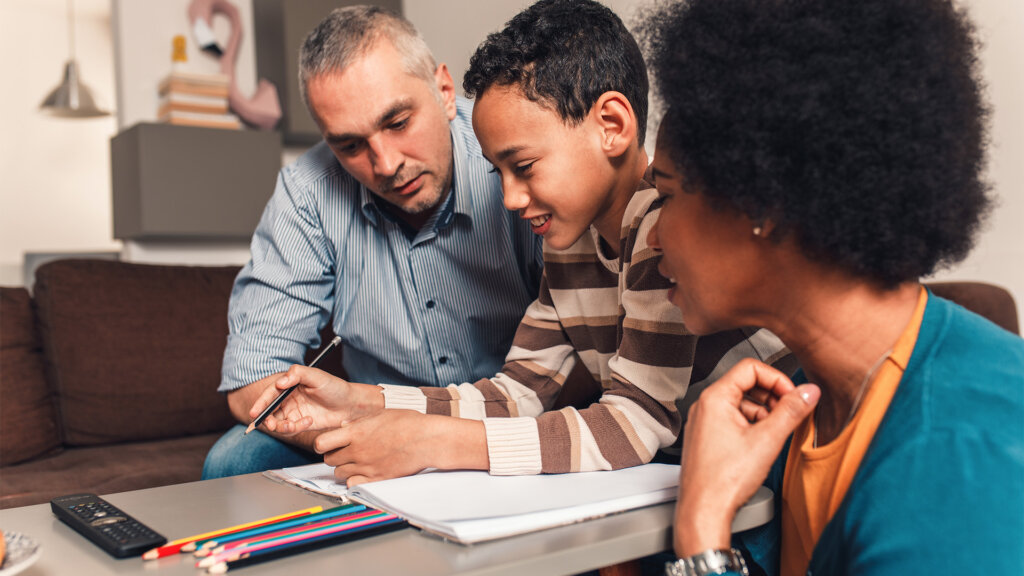
As a starting point, it’s important to know that homeschooling is more self-directed compared to online schooling. This is because parents or guardians take on the responsibility of their children’s education in homeschooling and making sure they’re on track with their work and progress. At Impaq, for example, we do give our homeschooled learners detailed recommended year plans and timetables, but overall, it is self-directed learning.
A big advantage here is that homeschooling learners have the flexibility to study at their own time, and at their own pace.
Online schooling also gives you the flexibility of learning from wherever you are, but with the additional structure and guidance that many parents feel they need. That is, an online school has teachers, scheduled classes, timetables, support and more. In this regard, it’s good to go with a provider that has long-term experience in distance learning so as to ensure your child gets the best solution for them.
Pathway to matric
While homeschooling and online schooling might differ in terms of delivery, these options of education follow the same CAPS-aligned curriculum that every school in the country follows.
Because of this, these learners write the same exams as every other school child in the country and they will receive a National Senior certificate upon successfully completing their matric.
Flexibility
By using a provider that adheres to the standards as outlined above, this gives your child flexibility to re-enter a mainstream school at any point.
This may be beneficial if, for instance, you travel with your children for prolonged periods of time for work purposes. While travelling, your children can be home educated but if you settle back into one place in South Africa, you can then choose to send your child to a school without missing a step.
This flexibility is also useful for parents whose children are on waiting lists for their preferred schools of choice. These children can be home educated until a placement opens for them.
Another flexible aspect of homeschooling and online schooling is that it is well-suited for children who pursue their talents at a higher level, such as professional athletes and even entrepreneurs.
Choice
Homeschooling and online schooling learners often have access to more subjects than those that are typically offered in schools.
In a school, learners at FET level (Grade 10-12) are typically restricted to choosing only a certain number of subjects, depending on the resources available at the school. However, these same limits do not apply for homeschooling learners as they have the choice to take on more extra subjects.
Sociability
Pursuing the homeschooling or online schooling route doesn’t mean that your child misses out on social activities.
In fact, home educated children can have more time to engage in several extra-curricular activities and interact with a variety of peers. Children who are part of an online school are also grouped together in a class, where they have regularity in interacting with their peers.
Support
Finally, homeschooling parents, who use the likes of Impaq, get access to very detailed facilitator guides that inform them on how to teach a subject. In addition to this, a good online school will have qualified teachers on board who can assist your child at every step of the way and provide you with feedback on their learning progress.

About our Contributor
Louise Schoonwinkel is the Managing Director of Optimi Home. Impaq, which forms part of Optimi Home, is South Africa’s largest homeschooling provider. It provides a comprehensive set of educational products based on a CAPS-aligned homeschooling curriculum for Grades R to 12. Impaq also launched an online school at the start of 2022.