Your money has the power to do a lot of good if you’re spending it in the right place! By buying products from social enterprises, you’re supporting a business that makes a meaningful impact in lives and spaces that need it most.
So first, what is a social enterprise? According to Jackie Vorster of Colours of a Kind (which we’ll hear more about in just a moment) a social enterprise is able to fund and manage itself efficiently, just like any other business-except that in addition to “doing well” financially, it also “does good”. Social enterprises can do good by promoting sustainable development and social welfare by creating jobs for the marginalised, providing services for underserved communities or safeguarding the environment.
In buying goods and services from social enterprises, companies can incorporate social enterprises into their supply chains and generate social or environmental impact through their procurement. This then drives impact directly and goes beyond awareness building, while also reducing supply chain risks.

Money Well Spent
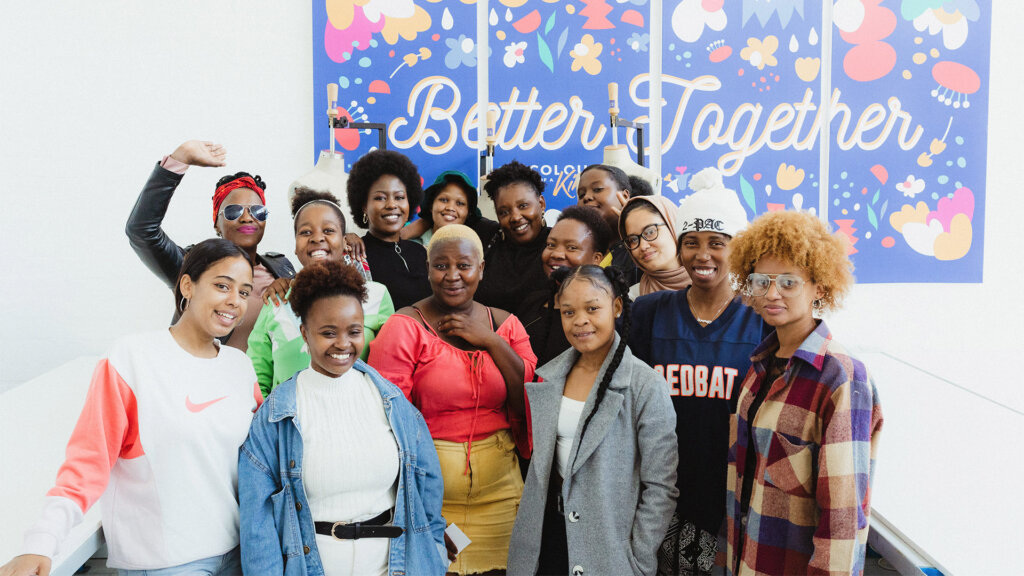
Cape Town-based organisation Colours of a Kind has an aim to uplift and empower young women in disadvantaged communities in and around the Mother City. This is done by educating them and helping them to find a job and build a career within the textile and fashion industry.
The launch of their Creative Studio at the beginning of 2023 at WEX in Woodstock has incorporated a bespoke “Cut, Make and Trim (CMT)” service with purpose to their overall proposition, where customised products and corporate gifts are produced and sold by their graduates to business customers, in the aim of helping them gain financial independence.
“Our business-as-usual empowers and uplifts women from underserved communitiesand builds income streams. For example, shopping bags previously ordered from a normal factory can be ordered from us, and that order will do so much good,”says Jackie.

Making a Direct Impact
In addition to being a Partner in Social Business, companies can donate towards good community work, specifying the avenue they would like to see their funds used, or provide gifts in kind, such as equipment and supplies, or even training hours from industry specialists. For both options, a tax-deductible receipt will be issued.
Jackie concludes: “One of the direct impacts of investing in social businesses such as Colours of a Kind, is that it increases the amount of private capital used for social causes, helping to cover the public shortfall. Indirectly, it backs market development and motivates other investors to get involved, creating a more enabling environment and greater access to much-needed capital in these tough economic times.”