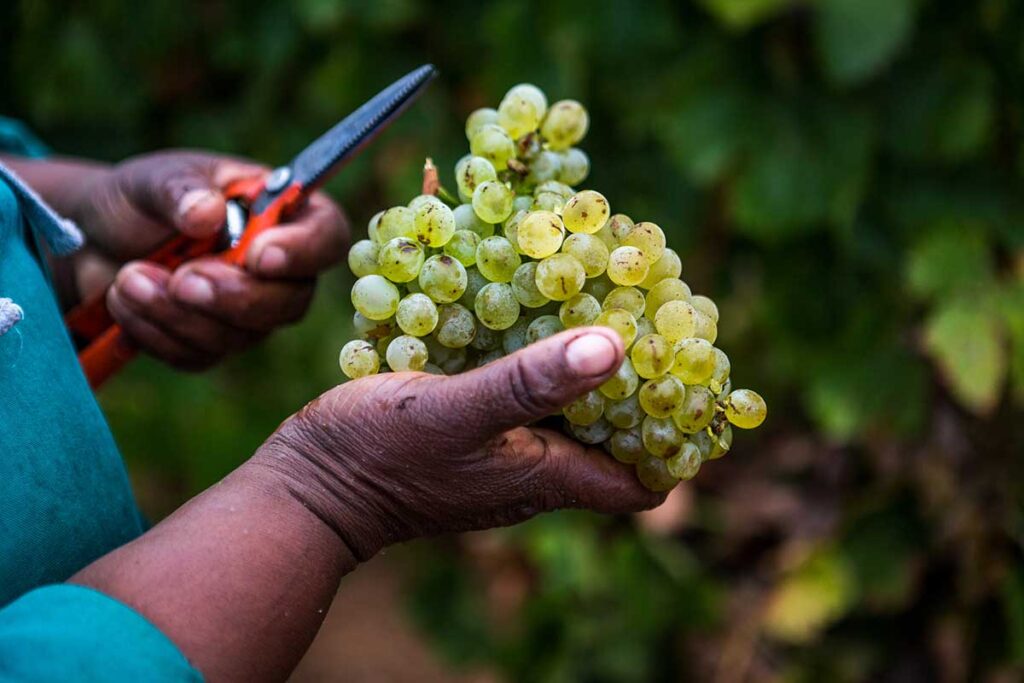
For decades, Chenin Blanc was treated as an afterthought. It was the grape you planted for yield, not for legacy – cropped heavily, sent to co-ops, often destined for distillation. Reliable, yes. Respected, no.
And yet, today, Chenin Blanc stands as South Africa’s defining varietal, not just locally, but on the global stage. It’s a wine of precision, place and potential.
What changed was not the grape. It was the belief in what it could be. At Vinimark, it’s seen as one of South Africa’s most compelling wine stories.
From workhorse to opportunity
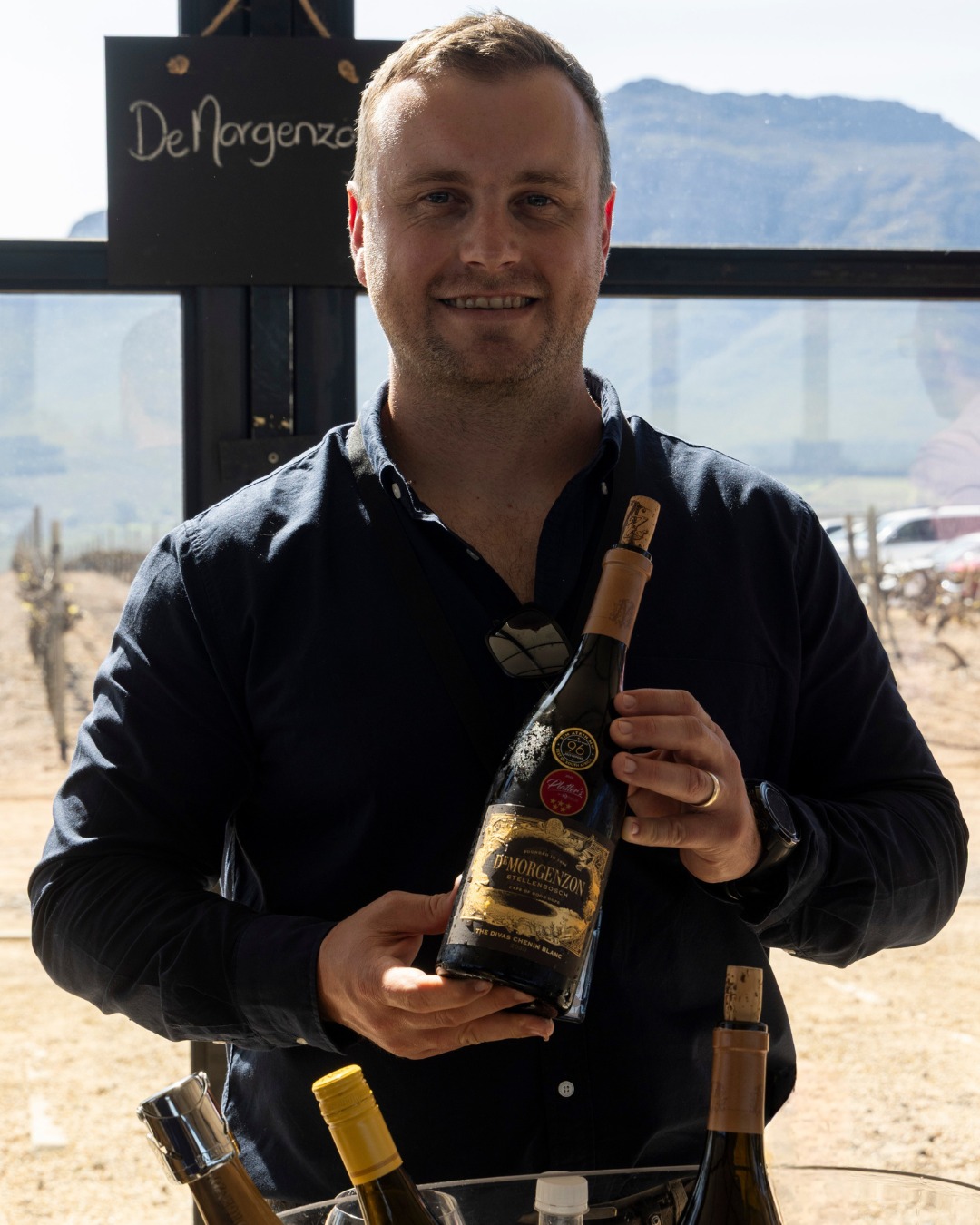
For much of its history, Chenin Blanc served a functional role in the industry. As Winemaker Anthony Sanvido of DeMorgenzon puts it, it was ‘the workhorse’, often cropped for volume and diverted to distillation.
But that same history created an unexpected advantage.
Many of South Africa’s most prized Chenin vineyards exist today because they were never replanted – and growers who couldn’t afford to replace them preserved what would become the backbone of the country’s old-vine movement.
The real shift came in the 1990s. Winemakers like Ken Forrester began challenging convention by tasting together, sharing knowledge and applying fine-wine principles to Chenin Blanc. That shift in mindset laid the foundation for what would become the Chenin Blanc Association South Africa and a broader movement towards quality.
Shaped by place
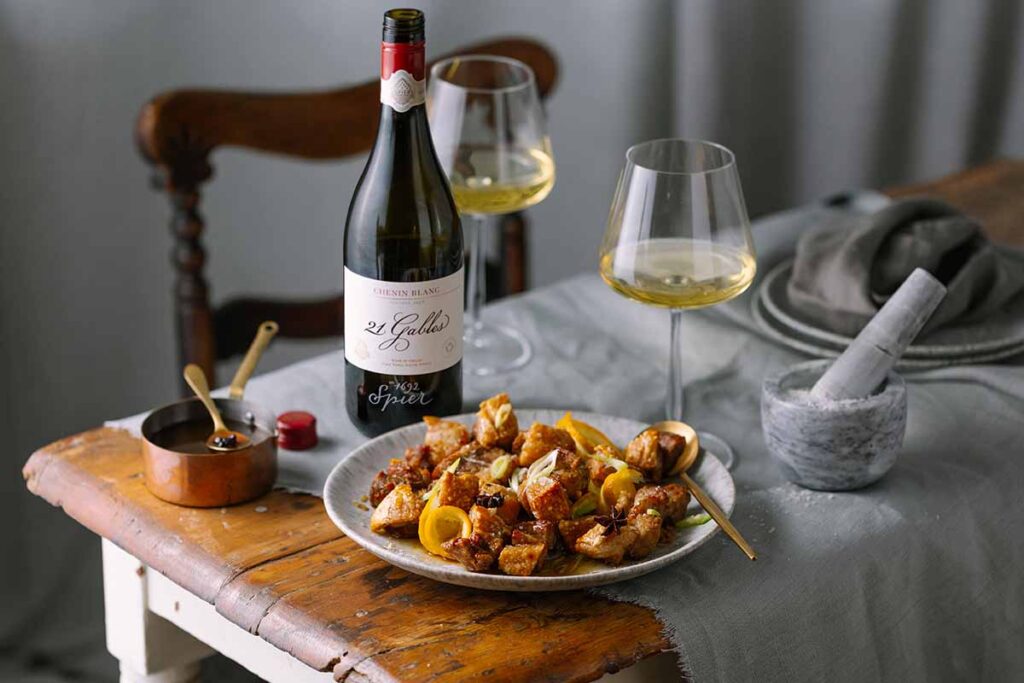
At the heart of Chenin Blanc’s rise is its ability to express terroir with remarkable clarity. Winemaker Johan Jordaan of Spier, recognised as Chenin Blanc Master Winemaker at the Master Winemaker 100 awards in both 2025 and 2026, highlights its responsiveness to site and intent. For him, the grape’s versatility lies in how differently it performs across vineyards.
At DeMorgenzon, this plays out across varied elevations and aspects. Lower slopes ripen earlier, producing softer profiles, while higher sites retain acidity and structure for longer. As Sanvido explains, cooler, south-facing slopes are critical in preserving freshness in a warming climate.
This is no longer incidental. It is deliberate. Producers are actively using site variation to build layered, complex wines that reflect both place and decision-making.
From soil to glass
As the focus has shifted to quality, so too has the approach to farming and winemaking.
At Spier, Jordaan emphasises long-term thinking. Understanding the desired wine style informs everything from vineyard planting to soil management, with a strong focus on resilience and sustainability.
Chenin Blanc may be robust in the vineyard, but it is exacting in the cellar. Sanvido notes its sensitivity, where balance is critical. Too much intervention can overwhelm its character, too little can leave it without structure.
This tension, between resilience and delicacy, is what makes Chenin Blanc both challenging and rewarding.
One varietal, many expressions
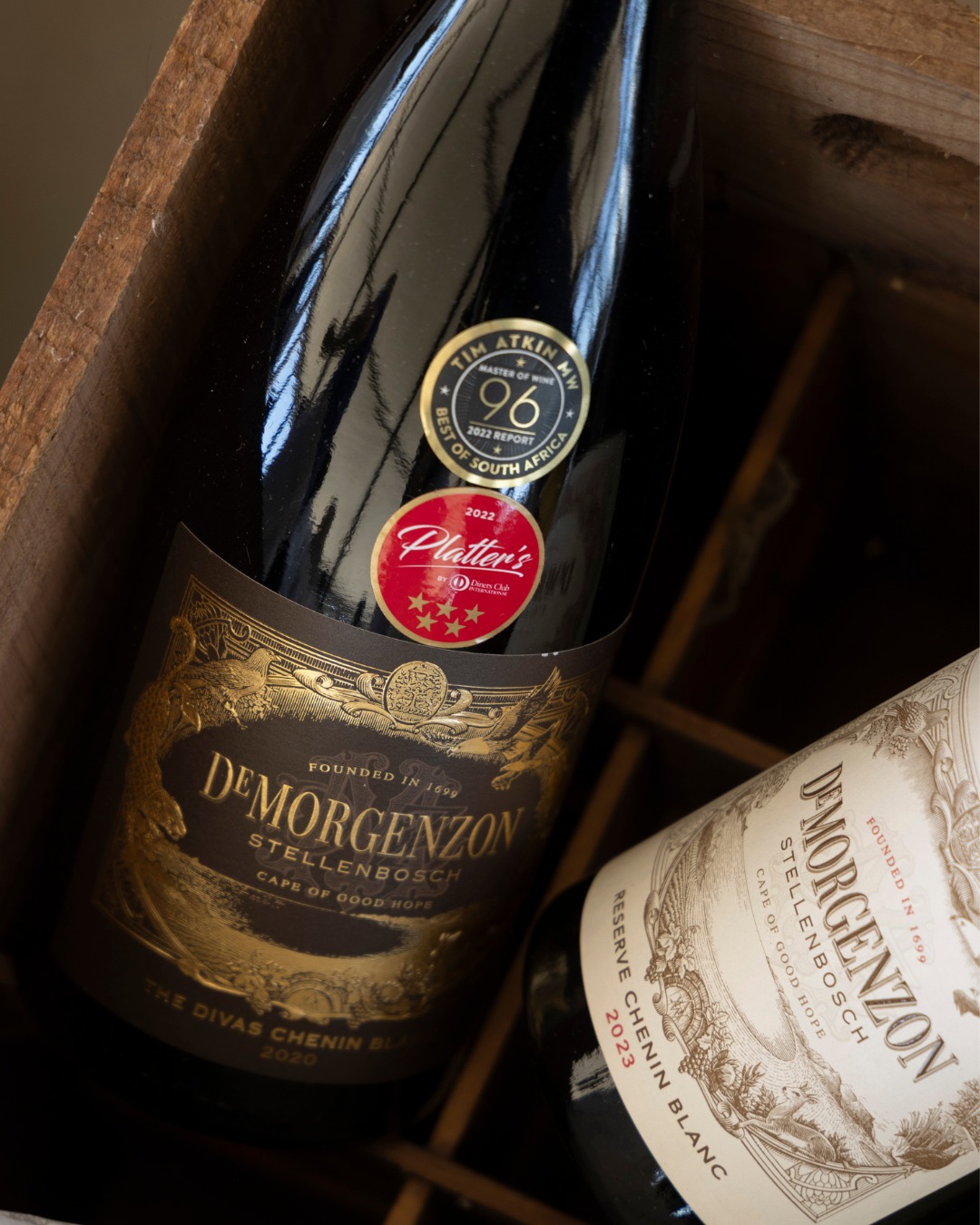
Few grapes offer Chenin Blanc’s range. At DeMorgenzon, an entire spectrum of wines is produced from a relatively small footprint, from fresh, early-drinking styles to more structured, age-worthy expressions.
This versatility extends to technique. Chenin responds to stainless steel, oak, concrete and amphora, each contributing a different dimension.
It is this range that makes Chenin Blanc such an important part of the Vinimark portfolio, reflecting both regional diversity and stylistic depth.
In Darling, Winemaker André Scriven of Darling Cellars sees this expressed through dryland bush vines, producing fruit-driven wines with layered stone fruit and subtle tropical notes – wines that also develop complexity over time.
As Abi Mitton, Wine Marketing and Brand Manager of the Chenin Blanc Association South Africa, points out, this diversity is one of South Africa’s greatest strengths, allowing the country to produce Chenin Blanc across a wide stylistic spectrum, from crisp and mineral to rich and textured.
A shift in perception
As production has evolved, so too has perception. Jordaan describes Chenin Blanc as a ‘Cinderella story’, no longer a lower-priced option, but a wine capable of standing alongside the finest in the world.
This shift is reflected in both industry and consumer behaviour. As quality has improved and old vines have gained recognition, Chenin Blanc has moved from being overlooked to being celebrated in its own right.
Sanvido sees this as both validation and responsibility. Chenin Blanc has become a flag-bearer for South Africa internationally, yet there is still work to be done to strengthen its global positioning, particularly in moving from bulk to bottled exports.
Collaboration has been central to this progress. As Mitton notes, the sharing of knowledge and collective ambition across producers continues to raise standards.
Looking ahead
Chenin Blanc’s story is still unfolding. As vineyards age, producers are gaining deeper insight into how these vines evolve over time. At the same time, climate change is shaping future decisions, with increasing focus on cooler sites and higher altitudes.
There is also a growing international opportunity. As global demand shifts towards wines with authenticity and a sense of place, South African Chenin Blanc is well-positioned to lead.
At Darling Cellars, this is already evident, with Chenin Blanc spanning both accessible styles for newer consumers and more complex wines for those seeking depth and longevity.
For Jordaan, the path forward is clear: the potential is there, but consistency in quality and clarity in positioning will determine how far it can go.
A shared story
Chenin Blanc’s rise is not the work of a single producer or region. It is the result of a collective effort by winemakers, growers, and industry partners, including Vinimark, who chose to see more in a grape that was once overlooked.
What began as a practical choice has become something far more powerful. Chenin Blanc is not just part of South Africa’s wine story. It is leading it.
In a nutshell
South African Chenin Blanc range
When is Chenin Day? International Drink Chenin Day is celebrated annually on the second weekend of June to honor South Africa’s most widely planted white grape