Cape Town is one of the few cities in South Africa where you can start the day with fresh, hot Swahili-style chapati and beans, the way you’d find it on the coast of East Africa. A short walk away, you can grab an espresso at one of the world’s best coffee shops, follow it with an exquisite bowl of Japanese ramen for lunch, and end with an authentic Napoli-style pizza on 48-hour fermented dough for dinner.
Dennis Molewa, Founder of Unexplored Cape Town & African Food Business Fund, says the inner city is layered like that. He expands further. “It’s a whole world of cuisine within a few blocks. Except it’s like a globe that never turns: one side always lit, the other left permanently in the dark. Cape Town does not need a more attractive culinary story or a bigger marketing budget. It needs a fuller one. There’s nothing wrong with innovation and artisan food craft. I just wonder if there’s room for a wider view that shows both sides of Cape Town’s food story.”
“Ndeye runs the best hole-in-the-wall Senegalese kitchen in the CBD; informal, tiny, unmissable. She serves Thieboudienne, Senegal’s answer in West Africa’s long running jollof wars: red rice with fish, or with beef and chicken so tender it falls apart. Ask who makes the best jollof, and she casually waves it off. Senegalese cooks, she says, are the OGs. Nothing left to prove. She cooks because Cape Town’s roughly 1,000-strong Senegalese community insists someone within the city serves the real thing.”
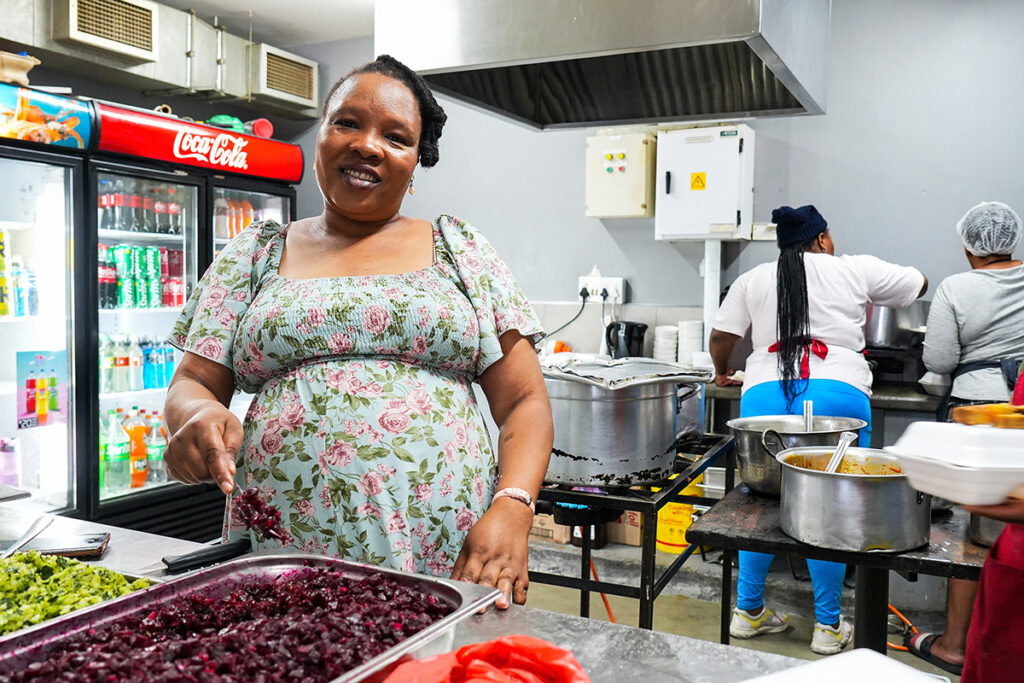
On Long Street, a cluster of African kitchens is run by cooks who never trained at any culinary institution; recipes handed down within family instead. And in the city centre, Mama Ivy is up by 4:30am, frying batch after batch of Magwinya with a rotating cast of fillings, carefully timed for commuters filing into the taxi rank and bus terminus next door.
A set of experiences
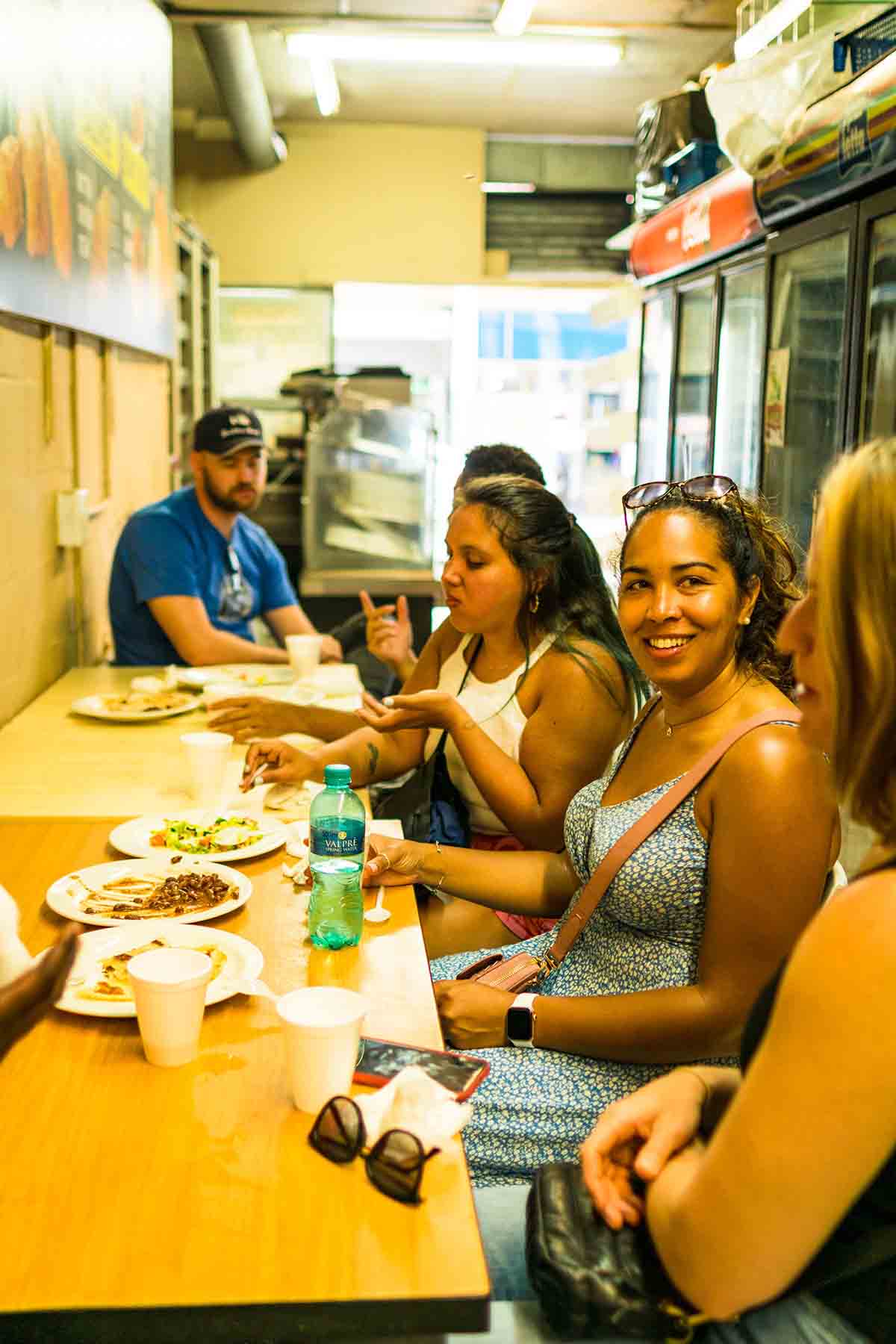
“Food becomes powerful the moment we stop treating it only as something to consume and start seeing it as something that helps us understand a city and its people. It dismantles preconceptions and brings together people who wouldn’t otherwise mingle. That interaction itself is the real impact, and it’s a different thing entirely from simply passing through and taking a photo. This belief of mine started to take shape from 2009, when dragging friends into the kitchens that the tourism sector often overlooked. It’s since grown into a set of experiences through the CBD, Salt River and Bellville, introducing people to the city through those who feed it daily.”
“Gentrification is the quiet pressure squeezing kitchens like these: rising rents and shrinking trading space pushing out marginalised food entrepreneurs, whether they’ve traded here for decades or arrived last year. Take the Post Office in the CBD for example. It was one of the last places downtown where Bo-Kaap and former District Six residents could still gather for masala steak sandwiches, koeksisters and rooibos, and spend a whole afternoon together. Minkah and Nazley ran it as a Cape Creole kitchen for thirty years, until they were forced to leave; Minkah in September 2025, Nazley in March 2026. What made it matter wasn’t a marketing word like “authentic.” It was that a meal there never needed a special occasion or a big budget.”
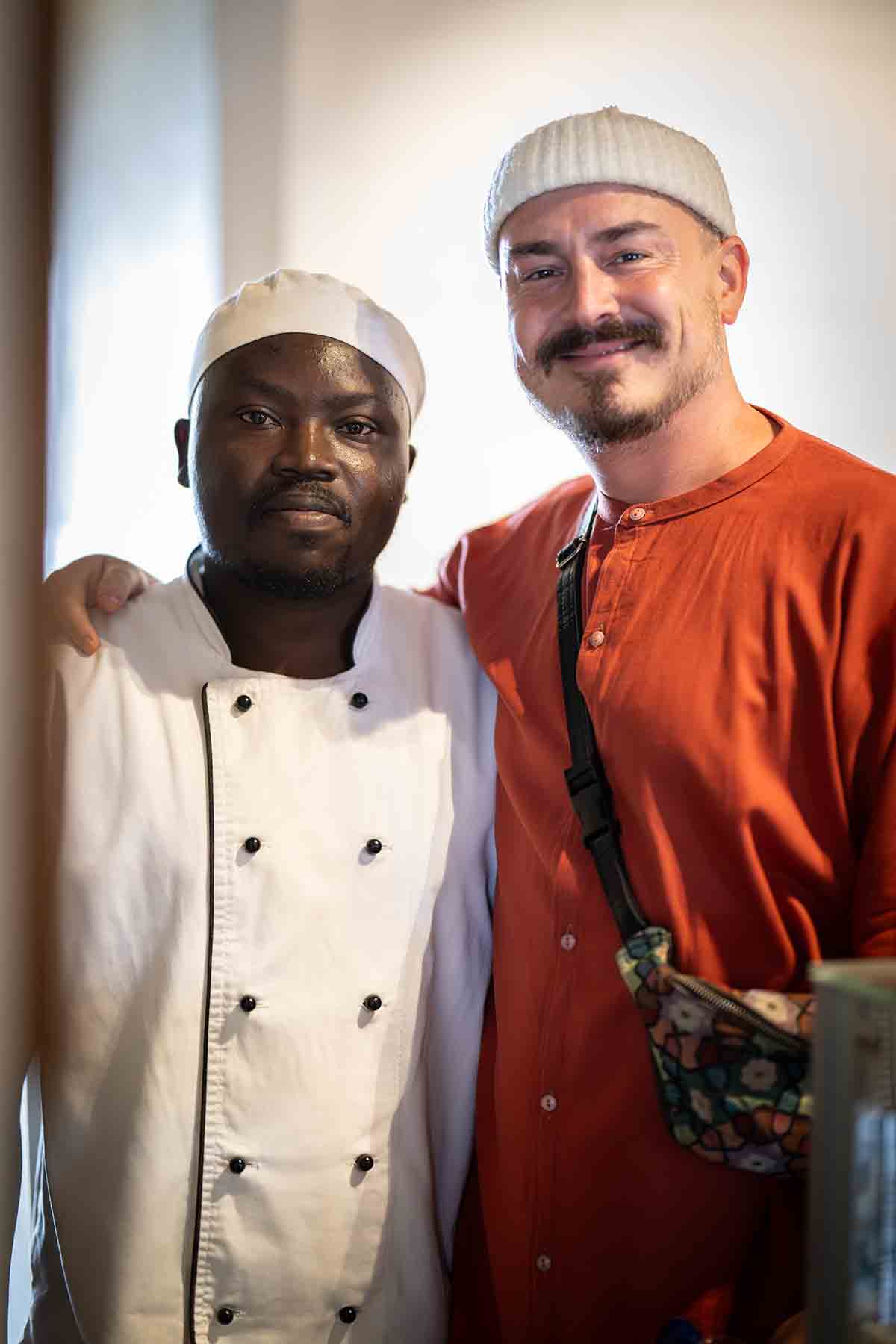
“Plenty of sit-down restaurants now serve similar fare to visitors and well-off locals. But most Capetonians could only afford it once in a while, if at all. That’s the nuance missing from Cape Town’s food narrative: not whether something is authentic, but whether it’s accessible to the people whose history it carries.”
“Amid lease non-renewals, rising rent and the building’s sale, Minkah and Nazley are still searching for affordable trading space. Housing activists like Reclaim the City have spent years pressing exactly this point about Cape Town’s inner city: that unchecked gentrification-driven eviction risks completing what apartheid’s forced removals set out to do. It’s a framing South Africa’s own Constitutional Court effectively endorsed in a 2024 ruling on a similar Cape Town displacement case. In a post-apartheid, post-colonial coastal city, a space’s value was never going to be just the profit it generates; it’s measured just as much in the tangible and intangible heritage it carries.”
“What’s at stake is Cape Town’s actual culinary identity: lived daily, not shown online, and African and Creole at its core. Losing that would cost the city the very thing it claims to be proudest of.”
“This is demand, not a fringe concern. American Express’s travel trends research shows modern travellers, Gen Z and Millennials especially, rejecting luxury-only itineraries for cultural immersion and food provenance. Roughly a third of travellers now base destination choice on food, and nearly half say unusual dining is their main motivation to travel. That demand is an economic opportunity waiting to be leveraged for the marginalised food entrepreneurs in the city centre who already preserve much of what is Cape Town’s real food identity, Ndeye and Mama Ivy among them.”
“It’s also a chance to tell a more inclusive story, one that honours immigrant and diaspora communities as fully as anyone born here. Given the anti-migrant unrest sweeping Johannesburg, Pretoria and Durban this year, that story could not be more timely. Food isn’t a side note to travel anymore. It’s becoming one of its central reasons.”
“Cape Town isn’t exceptional because it’s the world’s most diverse city. It’s exceptional because few cities express their diversity as visibly, or deliciously. Indigenous Khoi and San knowledge sits at the root of it; the same knowledge behind the rooibos already on this city’s tables, used and passed down long before it was ever sold in a box, alongside African and Asian influence built up over centuries, and European colonisation violently reshaped, renamed, and in places tried to erase all of it. What survives in the food today survived in spite of that, not because of it.”
“Tourism can extract as easily as it can protect. It depends on whether money and story-ownership stay with the people being visited. That’s the standard I hold my own experiences to. Every visitor should leave with a deeper understanding of this place, and more of the people who call it home should benefit from their visit.”
He concludes: “Protecting the kitchens that carry that story isn’t charity or nostalgia. It’s the difference between a city telling its own story and one performing a version of itself for visitors: a theme park, curated and pre-approved, standing in for the real thing. Food tells the city’s story. The question is whether we let it keep being told.”
Find out more here.
Pictures: Franz Pfluegl; Middle: Rodger Bowren.