The inaugural Cape Town Photography Festival, taking place from 4 to 27 September, 2025, explores the multifaceted theme of HERITAGE through photography, offering a platform for local, national, and international visual narratives. Inspired by South Africa’s Heritage Month, the festival invites audiences to reflect on identity, memory, and place through the lens of heritage.
According to Festival Director Heidi Erdmann, the theme emerged organically: “Naoya Yoshikawa (Japan) kept reminding me that a unifying theme gives direction and coherence, and once I landed on ‘heritage,’ everything began to fall into place. A conversation with Suok-Won Yoon (South Korea) about the global future of heritage led to the development of the ‘Future Heritage’ exhibition. I was also keen to include a project from Mauritius, where heritage is particularly layered, complex, and contested.
“Heritage is a powerful thread that connects past, present, and future. It fosters a sense of belonging, grounding us in time and place, and helps us understand where we come from and who we are. Heritage informs identity,” she adds.
Dynamic exhibitions, talks, and works

The festival will present a dynamic programme of exhibitions, talks, and workshops, designed to engage diverse audiences and foster meaningful connections, especially with younger generations through educational workshops.
Erdmann believes Cape Town has a rich history of celebrating photography, having hosted the Month of Photography festival from the late 1990s until 2014. “Since then, South Africa’s photographic landscape has evolved significantly, with a new generation of artists using the medium to explore pressing social, political, and environmental issues. The city itself has grown as a cultural hub, now home to two new private museums that reflect its deepening commitment to the arts.”
Having participated in every photography festival in Cape Town since 1999, Erdmann says: “The last one was in 2014, and I’ve been trying to get another off the ground ever since, but life kept getting in the way. Then, in 2023, I was invited to the Panoràmic photography festival in Barcelona, which reignited the spark. Still, it was the thought of turning 60 in September 2025 that gave me the final push.”
A turning point came when Yoshikawa and Yoon agreed to come on board. Erdmann, who met them on the international photography festival circuit (Naoya in 2011 and Suok-Won in 2017) says their support has been instrumental.
Audiences are more curious and receptive
She adds that photography has undergone a significant transformation since the last festival in 2014. “The number and diversity of practitioners have grown, and audiences are more curious and receptive to the medium. Cape Town itself has matured into a vibrant, cosmopolitan centre for art and culture. This growth, in both the city and the medium, makes now the right time to relaunch the festival.”
The festival will reflect the full scope of the photographic ecosystem, spotlighting not only image-makers but also the thinkers, facilitators, and institutions shaping the field. “Our dynamic TALKS programme does exactly that,” says Erdmann. “I was also determined to include children’s photography. I’m deeply curious to see how young people interpret their world through the lens.”
She explains: “We live in a world saturated with images, where everyone is a photographer. But within the context of a festival, photography reclaims its power as a storytelling medium. Our programme demonstrates just how elastic the medium is – from hard-hitting documentary to narrative-rich constructed images, and even work shaped by AI. It’s a visual language that adapts to the way we live now.”
South Africa has a long and rich relationship with photography. From the powerful “struggle images” that documented the liberation movement to today, where photography remains deeply intertwined with questions of identity, memory, and justice. It is telling that many major acquisitions by the Iziko South African National Gallery in the 2000s were photographic works. Some of the country’s most significant contemporary artists work with the medium, which remains a space where politics, healing, and creativity intersect.
Naoya Yoshikawa, Suok-Won Yoon
Naoya Yoshikawa and Suok-Won Yoon, the festival’s co-curators, will each present solo exhibitions of their own work.
In addition, Yoon curated the Future Heritage exhibition, inviting Boris Eldagsen (Berlin), a global leader in the use of AI in photography, to participate. The exhibition also features work by Mohau Modisakeng (South Africa), Ahn Jun (South Korea), and Koo Gi Jeong (South Korea), with a not-to-be-missed discussion forming part of the festival programme.
Yoshikawa curated a student photography exhibition from Japan, which will be presented in dialogue with work by students from Stellenbosch University.
Erdmann continues: “In Mauritius, I invited Karen Pang and Meha Desai to curate an exhibition that powerfully reflects the island’s complex heritage. I also wanted to include critical conversations around places like District Six with the Van Kalker Photo Studio (1937 – 1978) on view at the District Six Museum and District Six through the lens of Jansje Wissema, on view at the Cape Institute for Architecture in Hout Street. Furthermore, I was fortunate to bring a historically important exhibition on board on loan from the remarkable Kilbourn Collection, which will be on view at the Sanlam Art Gallery. Music writer Carsten Rasch has curated an exciting music photography exhibition with a vibrant programme of events. A conversation with Banthatile Rwasoka led to a collaboration with Senzeni Marasela, while a separate exchange about Margaret Courtney-Clarke from Namibia quickly evolved into a confirmed project.”
The Talks Programme is diverse, offering something for everyone including educational workshops for schoolchildren and a special event tailored for students. The children’s exhibition, Kids Eyes, is also presented in concert with JM Coetzee’s Boyhood book of photographs. It offers a poignant view of Cape Town, through the eyes of 16-year-old in 1956 and 1957.
“I believe it’s these subtle connections and cross-references that will make this an exceptional festival,” Erdmann concludes.
Visit https://capetownphotofest.co.za/ for the full programme.
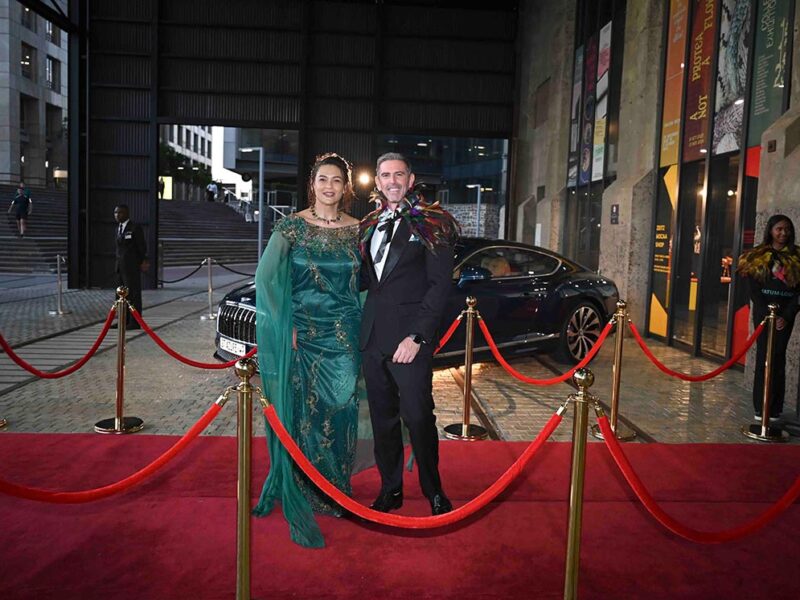
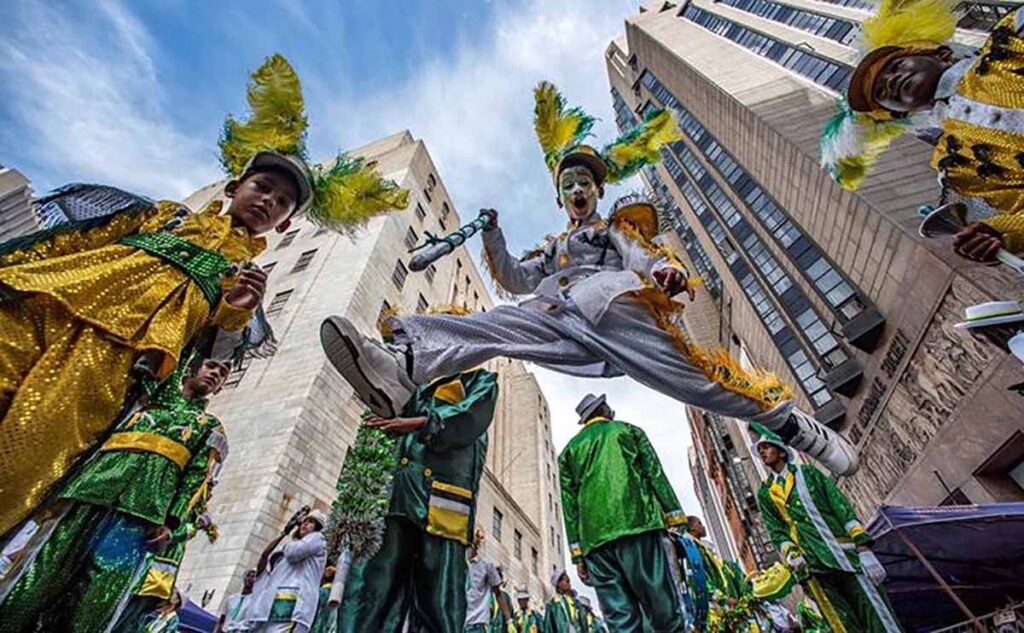
Pictures from top: A boy from Posh Vibrant Youth troupe leaps during the Tweede Nuwe Jaar minstrel procession, 2 January 2024. (Picturet: Brenton Geach / Gallo Images). Heidi Erdmann, Festival Director. Picture: Sean Wilson.